Class A Fire Roofs →
About 1,800 San Rafael parcels sit in High fire severity zones and 4,100 more in Moderate. What Class A actually requires.
Roofing Guide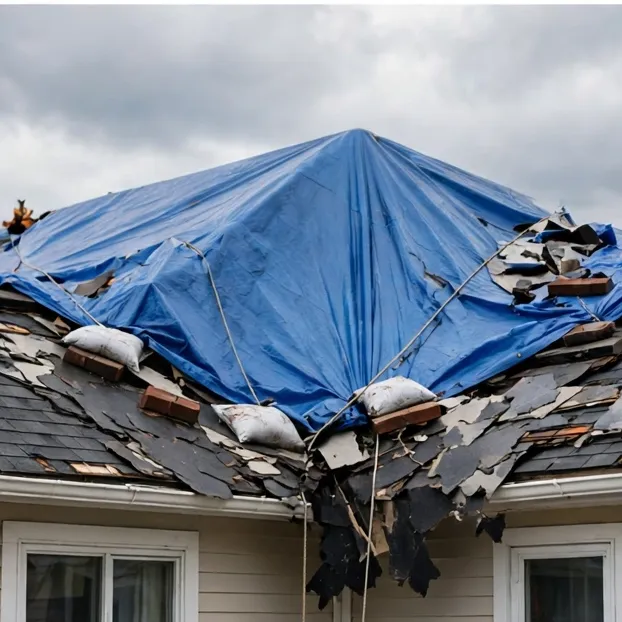
Home / Blog / Atmospheric River Prep
Roofing Guide · San Rafael, CASan Rafael’s rain does not fall evenly — it arrives in a handful of major storms between November and early April. December 1995 dropped 8.74 inches in a single day. Here is how a roof gets ready.
NOAA’s climate record puts San Rafael’s annual rainfall around 32–34 inches — and the monthly pattern matters more than the total. The rain concentrates from November into early April, and a handful of atmospheric rivers deliver a large share of it. The city’s wettest recorded day, in December 1995, dropped 8.74 inches. A roof does not need to survive average weather; it needs to survive the worst weekend of the year. October is when that gets decided.
Because storm rain is a different test. Wind drives it uphill under laps and tile; gutters overflow back under eaves; valleys carry volumes they never see in ordinary rain; and 8 inches in a day exposes marginal details that a decade of drizzle politely ignored. Most “sudden” storm leaks are old weaknesses meeting their first real examination. The pre-season version of the same story is a maintenance list — which is the entire point of checking in October instead of January.
During: stay off the roof, full stop — wet roofs and ladders are how storm season hurts people. Contain water indoors, note where it appears, and photograph the stain and anything visible from the ground. After: walk the property for slipped tile, lifted shingles, and debris; photograph everything before cleanup; and if water got in, our storm damage team’s first job is making the roof watertight, with documentation your insurer can use — our insurance claim page explains how that file gets built.
Before, during, and after the big ones.
Call (628) 202-3250 →November through early April. NOAA figures put San Rafael’s annual rainfall near 32–34 inches, concentrated in those months and delivered disproportionately by a few atmospheric rivers — including the December 1995 storm that dropped 8.74 inches in one day, the city’s wettest on record.
Drainage: clear valleys, clean and check gutters and downspouts, and clear low-slope drains. More storm leaks trace to failed drainage and flashing than to the roof surface itself — and drainage work is the cheapest line on this page.
It is diagnostic gold: it means a marginal detail — flashing, a valley, an underlayment lap — passes ordinary rain and fails under volume or wind. Those do not heal; they widen. A free inspection during the dry season finds it while the fix is still small.
No. Check from the ground and the attic, photograph what you find, and let a roofer do the climbing — that is also what keeps any insurance documentation clean and credible.
About 1,800 San Rafael parcels sit in High fire severity zones and 4,100 more in Moderate. What Class A actually requires.
Roofing GuideFoam roofs do not wear out all at once — their coating does. When a recoat saves the roof, and the signs it is too late.
Roofing GuideSan Rafael sales come with a city building report — and buyers read roofs closely. What sellers and buyers should do, in order.
Roofing GuideFree pre-season inspection: valleys, drainage, flashing, and tile checked with photos — while there is still time to fix things calmly.
Call (628) 202-3250 →October appointments fill first. Tell us the roof type and the last time anyone was up there.